Music therapy
What is music therapy?
Music therapy is an evidence-based allied health practice. A qualified music therapist uses music intentionally to support a person's health, wellbeing and everyday goals.
It isn't about learning to play music "properly". It's about using music's natural ability to engage, motivate and connect people, so they can build skills and express themselves in ways that matter in their lives.

What happens in a session?
Each session is chosen and adapted to the person, their goals and what they love. Sessions might include:
- SingingFamiliar songs, and new ones we make up together
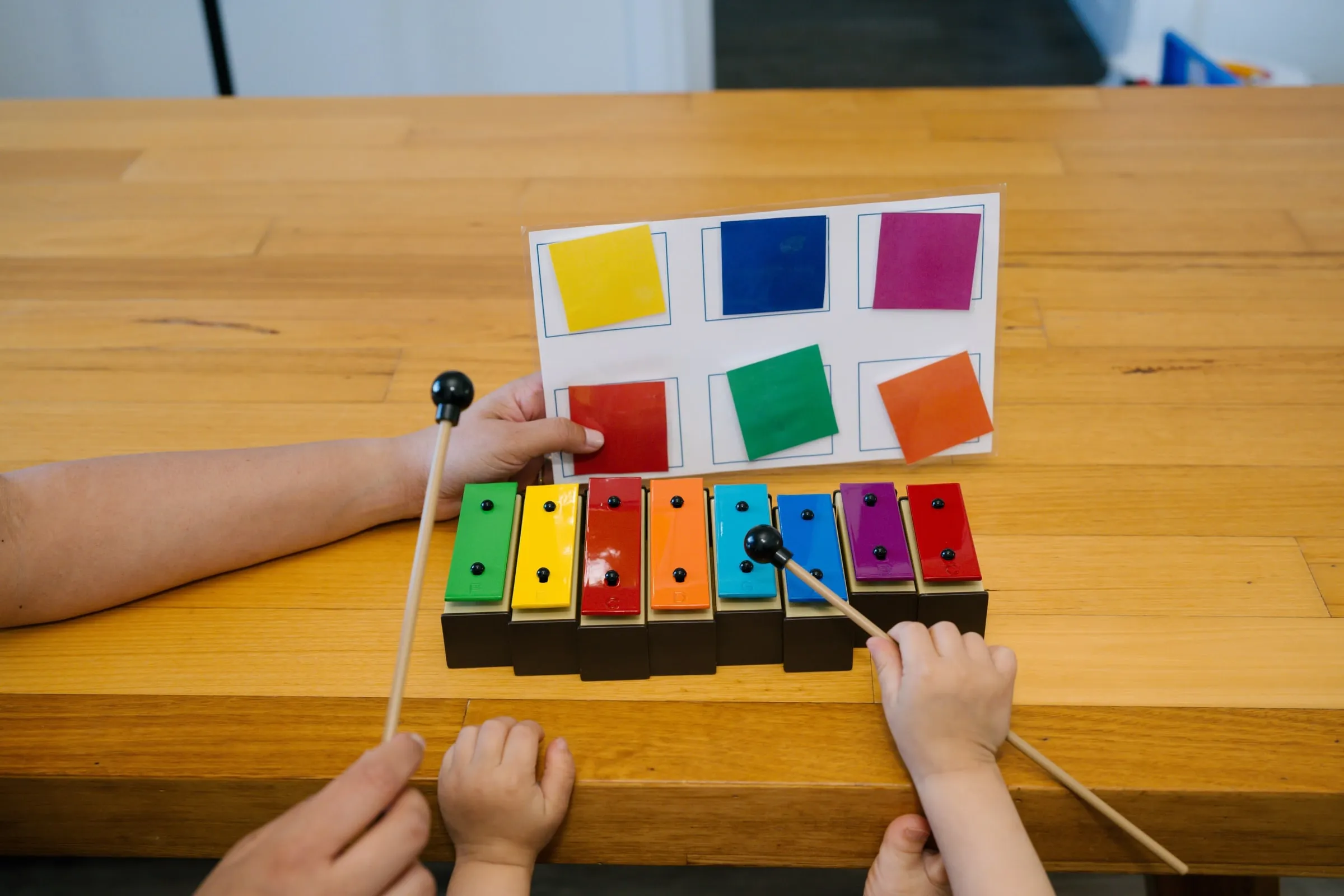
- Playing instrumentsDrums, guitar, xylophone, shakers and more
- Moving to musicRhythm and movement, at whatever pace suits

- ImprovisingMaking music in the moment, with no wrong notes
- SongwritingPutting thoughts and feelings into words and music
- Listening and relaxingCalm, focused listening to settle and connect
What is a Registered Music Therapist?
A Registered Music Therapist (RMT) has completed an accredited university qualification in music therapy, at Master's level in Australia, and is registered with the Australian Music Therapy Association (AMTA).
RMTs follow a professional code of ethics, take part in ongoing professional development, and plan, deliver and review therapy in a goal-focused way, like other allied health professionals.
Meet Maria, your RMTWho is music therapy for?
People of all ages and abilities, from babies and young children to adolescents, adults and older adults. No musical experience is needed.
It can support people with:
- Developmental delay
- Autism
- Disability
- Dementia and memory loss
- Emotional and mental health needs
- Anyone looking for connection and wellbeing
How is it different from music lessons?
Musical skills may still grow in music therapy, but they're a bonus, not the main aim.
| Music lessons | Music therapy | |
|---|---|---|
| The goal | Learn an instrument or singing | Personal, developmental or wellbeing outcomes, like communication, regulation and connection |
| Who leads it | A music teacher | A university-qualified Registered Music Therapist |
| Progress means | Better musical skill | Moving towards your own therapy goals |
| The plan | Follows a curriculum | Tailored to each person's needs, strengths and interests |
| Funding | Not funded as therapy | May be funded through the NDIS, Support at Home and other pathways |
Is music therapy evidence-based?
Yes. A growing body of research supports music therapy across disability, early childhood, aged care and mental health.